
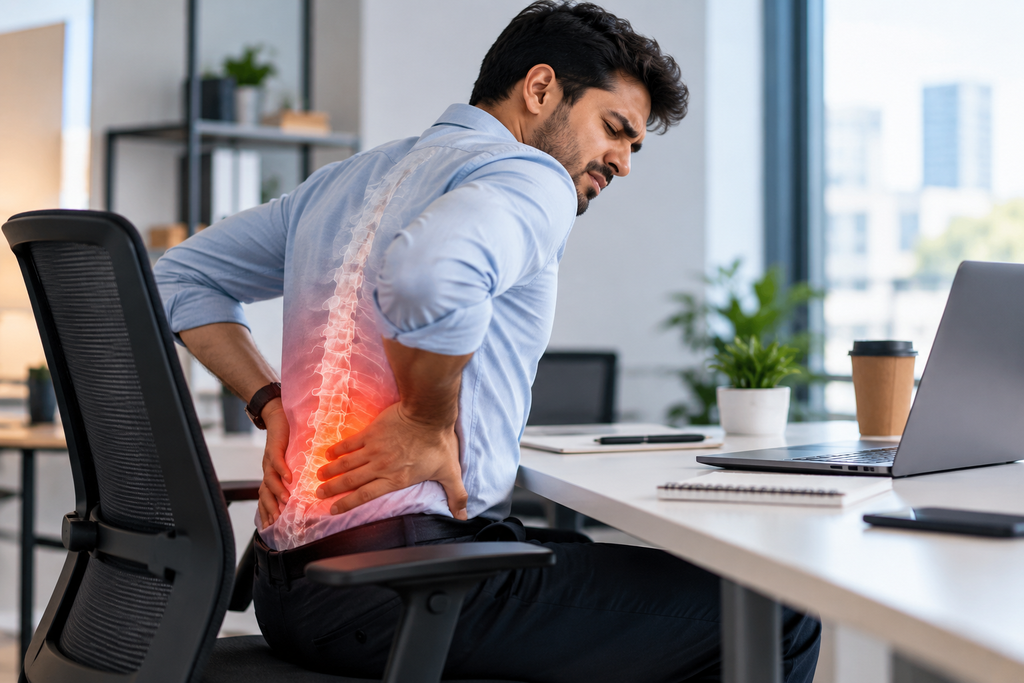
Arjun is a 28-year-old software professional in Bhubaneswar. His day begins at 9 a.m. and often ends at 7 p.m. eight to nine hours in front of a computer, with brief breaks for tea and lunch. For the past few months, he has noticed a dull ache in his lower back that worsens by evening. On some days, the discomfort radiates into his buttocks. He has started wondering whether his chair is the problem or whether something more serious is going on.
Arjun’s experience is not unusual. Back pain from sitting all day is one of the most common musculoskeletal complaints among office workers, students, and anyone who spends long hours at a desk. But understanding why it happens is important because treatment depends on the underlying problem, and not everyone who sits for long hours develops pain.
If you are searching for the best back pain doctor in Bhubaneswar, this article will help you understand the possible causes, when to seek evaluation, and what treatment options may be appropriate.
Can Sitting All Day Really Cause Back Pain?
The relationship between prolonged sitting and back discomfort is well-documented, but it is not as simple as “sitting causes back pain.”
Research shows that occupations requiring prolonged sitting are associated with a significantly higher risk of low back pain within the first year of employment. Studies have also demonstrated that sitting for long hours acts as a constant load on the back muscles and lumbar spine, leading to gradual maladaptation of these structures. Prolonged static sitting and reduced lumbar lordosis (the natural inward curve of the lower spine) are among the most frequently cited risk factors for occupational back pain.
However, it is important to clarify: sitting alone is not always the sole cause of back pain. Many people sit for long hours without developing significant symptoms. The development of pain likely depends on a combination of factors:
- Reduced movement throughout the day
- Prolonged static posture without position changes
- Poor sitting ergonomics
- Muscle fatigue or deconditioning
- Repeated slouching
- Inadequate breaks
- Pre-existing musculoskeletal conditions
In other words, sitting may be a contributing factor rather than the single definitive cause. This distinction matters because treatment should address the specific contributing factors identified during evaluation.
Common Causes of Back Pain From Sitting
Poor Sitting Posture
Prolonged slouching or sitting without adequate lumbar support alters the natural curves of the spine. When you slouch, the pelvis rotates backward, reducing lumbar lordosis by up to 50% and increasing pressure on the intervertebral discs. Over time, this sustained abnormal loading may contribute to discomfort and stiffness.
Lack of Movement
Remaining in one position for extended periods reduces blood flow to spinal tissues and allows waste products to accumulate in muscles, which can contribute to pain. Movement is essential for nourishing spinal discs and maintaining muscle function.
Poor Desk Ergonomics
An improperly set-up workstation can silently contribute to back and neck strain. Key factors include:
- Chair height: Feet should rest flat on the floor with knees at approximately hip level.
- Desk height: Should allow elbows to rest at approximately 90 degrees.
- Monitor position: At eye level and an arm’s distance away to prevent forward head posture.
- Keyboard and mouse placement: Close enough to avoid reaching or twisting.
- Foot support: Use a footrest if your feet do not reach the floor comfortably.
Muscle Weakness or Deconditioning
A weak core and poor general physical conditioning reduce the spine’s ability to tolerate sustained postures. Regular physical activity helps maintain muscle strength, flexibility, and endurance — all of which protect the back during prolonged sitting.
Existing Musculoskeletal Problems
Prolonged sitting can aggravate symptoms from underlying conditions such as disc degeneration, facet joint dysfunction, or sciatica. In such cases, sitting is not the root cause but a factor that worsens an existing problem.
Stress and Muscle Tension
Psychological stress can increase muscle tension, particularly in the neck, shoulders, and lower back. This does not mean the pain is “just psychological” — stress has measurable physiological effects on muscle tone and pain perception.
Where Does Back Pain From Sitting Usually Occur?
Back pain associated with prolonged sitting commonly occurs in:
- Lower back (lumbar region): Most common; often related to disc pressure and postural strain.
- Mid-back (thoracic region): May occur with slouching and rounded shoulders.
- Upper back and neck: Often related to forward head posture and monitor position.
- Around the shoulders: Muscle tension from sustained static posture.
The location and pattern of pain can provide useful clues during evaluation, but they cannot establish a diagnosis on their own. A proper clinical assessment is needed to identify the underlying cause.
Back Pain in Children and Teenagers
As a pediatric orthopedic surgeon in Cuttack and Bhubaneswar, Dr. Dibya Ranjan Sahoo regularly evaluates children and teenagers with back pain. This is an important area because back pain in young people requires a different approach compared to adults.
Several factors may contribute to back discomfort in children and teenagers:
- Long hours studying at a desk
- Extended computer or laptop use
- Smartphone and tablet use with poor neck posture
- Reduced physical activity
- Sports-related strain or overuse
- Heavy or improperly carried school bags
- Poor posture during study
- Underlying musculoskeletal conditions
However, one point deserves special emphasis: persistent, severe, nighttime, progressive, or activity-limiting back pain in a child or teenager should not automatically be attributed to poor posture or prolonged sitting.
In children, back pain is less commonly “mechanical” than in adults and more often warrants careful evaluation. Red flags in pediatric back pain include pain that wakes the child from sleep, fever, unexplained weight loss, neurological symptoms, and pain that limits normal activities. Conditions such as spondylolysis, discitis, Scheuermann’s disease, and other musculoskeletal or inflammatory conditions may present with back pain in young people.
Parents should understand that while most childhood back pain is not dangerous, persistent symptoms deserve professional assessment. A pediatric orthopedic consultation can help determine whether further investigation is needed.
Warning Signs That Back Pain May Need Medical Evaluation
Most episodes of back pain associated with sitting improve with activity modification and ergonomic changes. However, certain symptoms should prompt medical evaluation:
- Severe or persistent pain
- Pain that progressively worsens over time
- Pain following a significant injury
- Pain that repeatedly wakes you from sleep
- Fever or unexplained illness accompanying back pain
- Unexplained weight loss
- Weakness in the legs
- Numbness or tingling
- Difficulty walking
- Changes in bladder or bowel control
- Significant leg pain associated with back pain
- Persistent back pain in a child or teenager
- Pain that substantially interferes with work, study, or daily activities
Urgent attention is recommended for symptoms such as sudden loss of bladder or bowel control, progressive weakness in the legs, or numbness in the saddle area. These may indicate a serious neurological problem requiring prompt medical assessment.
This list is not intended to create alarm. Most back pain is not caused by serious disease. However, knowing when to seek help ensures that treatable conditions are identified early.
How Is Back Pain From Sitting Evaluated?
Evaluation begins with a detailed medical history and physical examination. Your doctor may ask about:
- How long you have had the pain
- Where the pain is located and whether it radiates
- Activities that trigger or relieve the pain
- Previous injuries or episodes
- Work and study habits, including sitting duration
- Physical activity levels
- Sleep quality and whether pain wakes you
- Any neurological symptoms such as numbness or weakness
The physical examination typically includes assessment of posture, spinal movement, muscle strength, sensation, and reflexes. The doctor may also examine your gait and check for signs of nerve root irritation.
Imaging is not automatically necessary for every case of back pain. Many episodes of mechanical back pain can be evaluated clinically without immediate X-rays or MRI. Imaging may be recommended when red flags are present, when symptoms persist despite conservative management, or when the clinical picture suggests a specific underlying condition.
Treatment Options for Back Pain From Sitting
Treatment depends on the underlying cause. There is no single approach that works for everyone. General treatment approaches may include:
Movement and Activity
Staying active is generally recommended over prolonged rest. For acute low back pain, advice to stay active probably provides a small reduction in pain intensity compared to bed rest. Regular movement — even short walks helps maintain spinal nutrition and muscle function.
Ergonomic Improvements
Adjusting your workstation can reduce sustained strain on the spine. Key adjustments include:
- Chair with lumbar support
- Seat height allowing feet to rest flat
- Monitor at eye level
- Keyboard and mouse within comfortable reach
- Footrest if needed
Physiotherapy
Physiotherapy may be recommended in selected cases to improve mobility, flexibility, strength, and movement patterns. A physiotherapist can provide individualized guidance based on your specific presentation.
Exercise
Appropriate physical activity is important for spinal health. For chronic low back pain, exercise programs (including motor control, Pilates, and yoga) probably provide a small to medium reduction in pain intensity and improvement in function. However, there is no single exercise that works for everyone. A doctor or physiotherapist can help determine what is appropriate for your situation.
Heat or Other Symptom-Relief Measures
Heat therapy may provide temporary relief by improving local circulation and relaxing muscles. These measures are supportive and do not address the underlying cause of pain.
Medical Treatment
Medication may sometimes be considered by a doctor depending on the cause of pain and the person’s individual circumstances. This article does not recommend specific medicines or doses. Any medication should be discussed with a qualified healthcare professional.
Treatment of the Underlying Condition
If an underlying condition — such as a disc problem, inflammatory condition, or structural abnormality — is responsible for the pain, treatment should address that specific condition. This is why accurate evaluation matters.
How to Prevent Back Pain When Sitting for Long Hours
A practical checklist for reducing sitting-related back discomfort:
- Take regular movement breaks — every 30 to 60 minutes, stand, stretch, or walk briefly.
- Avoid staying in one position for prolonged periods — change posture naturally throughout the day.
- Set up an ergonomic workstation — adjust chair, desk, monitor, and keyboard to fit your body.
- Keep frequently used items within comfortable reach to avoid repeated twisting or reaching.
- Maintain regular physical activity — aim for consistent movement outside work hours.
- Avoid prolonged slouching — but understand there is no single “perfect” posture that must be maintained rigidly.
- Adjust the screen to a comfortable viewing height — at or slightly below eye level.
- Support the feet appropriately — flat on the floor or on a footrest.
- Change posture naturally — the goal is variety, not rigidity.
A Simple Desk Routine for People Who Sit All Day
The objective is to interrupt prolonged sitting rather than maintain one rigid posture. A simple approach:
- Stand up every 30–60 minutes.
- Walk briefly — even 1–2 minutes of walking helps.
- Change your sitting position — shift weight, adjust recline, or use a sit-stand desk if available.
- Move the shoulders and upper back gently — roll shoulders, turn your head slowly side to side.
- Avoid remaining completely static — even small movements make a difference.
This is general advice, not a medical exercise prescription. If you have a specific condition, your doctor or physiotherapist can recommend appropriate movements.
When Should You See an Orthopedic Specialist?
Professional evaluation may be appropriate if you experience:
- Persistent back pain lasting more than a few weeks
- Recurrent episodes of back pain
- Pain affecting work, study, or daily activities
- Pain following an injury
- Numbness or weakness in the legs
- Difficulty walking
- Progressive symptoms
- Persistent back pain in a child or teenager
- Symptoms that do not improve with basic activity and ergonomic changes
Dr. Dibya Ranjan Sahoo is a Pediatric Orthopedic Surgeon in Bhubaneswar with a fellowship in Pediatric Orthopedics. He serves as Assistant Professor in the Department of Orthopedics at KIMS, Bhubaneswar. His practice includes evaluation and management of musculoskeletal conditions in children, adolescents, and adults.
Patients from Cuttack and surrounding areas seeking an orthopedic doctor or an orthopedic specialist in Bhubaneswar can arrange a consultation to discuss their symptoms and determine whether further evaluation or treatment is needed.
Frequently Asked Questions
1. Why does my back hurt after sitting all day?
Ans :- Prolonged sitting can contribute to back discomfort through sustained static loading, reduced movement, poor ergonomics, and muscle fatigue. However, other factors may also be involved, and evaluation can help identify the specific cause.
2. Can sitting for long hours cause lower back pain?
Ans :- Prolonged sitting is associated with an increased risk of low back pain, particularly when combined with poor posture, limited movement, and inadequate workstation setup. However, it is not the only factor.
3. How can I reduce back pain from sitting?
Ans :- Take regular movement breaks, adjust your workstation ergonomically, stay physically active, and avoid remaining in one position for extended periods. If pain persists, seek professional evaluation.
4. Does poor posture cause back pain?
Ans :- Poor posture may contribute to back discomfort, especially when sustained for long periods. However, posture is one of several factors, and pain is rarely caused by posture alone.
5. How often should I take breaks from sitting?
Ans :- A common recommendation is to stand and move every 30 to 60 minutes. Even brief movement breaks can help reduce spinal load.
6. Can teenagers develop back pain from studying?
Ans :- Yes. Long hours of studying, computer use, and poor sitting ergonomics can contribute to back discomfort in teenagers. Persistent or severe pain should be evaluated.
7. When should back pain be evaluated by a doctor?
Ans :- If pain is persistent, progressive, severe, associated with neurological symptoms, or interfering with daily activities, evaluation is appropriate. In children, persistent back pain warrants assessment.
8. Does back pain always require an X-ray or MRI?
Ans :- No. Imaging is not automatically necessary for every case of back pain. Your doctor will determine whether imaging is indicated based on your history, examination, and any red flags.
9. Can physiotherapy help with back pain?
Ans :- Physiotherapy may be recommended in selected cases to improve mobility, strength, and movement patterns. For chronic low back pain, exercise-based approaches probably provide a small to medium reduction in pain and improvement in function.
10. When is back pain in a child concerning?
Ans :- Back pain in a child is concerning if it is persistent, severe, wakes the child from sleep, is associated with fever or weight loss, causes neurological symptoms, or limits normal activities. Such symptoms warrant prompt medical evaluation.
Conclusion
Back pain associated with prolonged sitting is common, but sitting may not be the only contributing factor. Reduced movement, poor ergonomics, muscle deconditioning, and existing musculoskeletal conditions often play important roles. Understanding the underlying cause is essential because treatment depends on what is actually driving the symptoms.
Improving movement habits, workstation ergonomics, and physical activity may help in appropriate cases. However, persistent, severe, progressive, or unusual symptoms require professional evaluation — and this is especially true for children and teenagers, whose back pain should not automatically be dismissed as posture-related.
If you or your child has persistent, recurrent, or concerning back pain, an orthopedic evaluation can help identify the possible cause and determine whether further investigation or treatment is needed. Consulting the best back pain doctor in Bhubaneswar can be a valuable step toward understanding your symptoms and receiving appropriate care.
Your Backpain Needs a Professional Consultation Expert
Back pain is common, and most episodes settle. But persistent, severe, worsening, or recurrent pain especially with numbness, weakness, walking difficulty, or in children and teenagers needs professional consultation. An orthopedic expert can review your history, posture, movement, and warning signs to identify the cause. Early evaluation guides appropriate treatment and avoids unnecessary tests. Do not ignore pain that limits work, study, or daily life. Seek an expert consultation for accurate diagnosis and personalized care.
Meet Your Backpain Treatment Specialist Dr Dibya Ranjan Sahoo

Dr. Dibya Ranjan Sahoo is a Pediatric Orthopedic Surgeon based in Bhubaneswar. He evaluates back pain and musculoskeletal concerns in children, teenagers, and adults. Whether your pain is related to prolonged sitting, poor posture, sports strain, or an underlying condition, a proper assessment matters. Persistent, severe, or recurrent back pain should not be ignored. Book an orthopedic consultation to discuss your symptoms and receive appropriate, evidence-based care. Early evaluation helps identify the cause and guides the right treatment plan.
Book a Consultation with Dr Dibya Ranjan Sahoo
Dr Dibya Ranjan Sahoo Pediatric Orthopedic Doctor in Bhubaneswar
Address :- Pragati Enclave, MIG S 21, Niladri Vihar, Chandrasekharpur, Bhubaneswar, Odisha 751016
Book an appointment today and get a consultation for back pain treatment
