
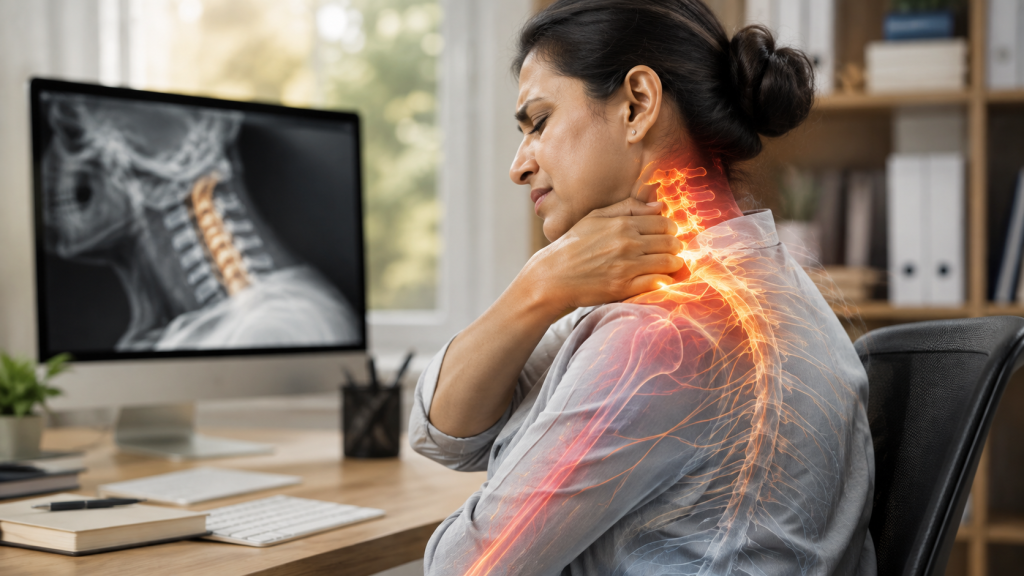
What Is Cervical Spondylosis?
Cervical spondylosis is a general term for age-related wear and tear affecting the spinal disks in your neck. It is the most prevalent degenerative condition of the cervical spine, predominantly affecting individuals aged 60 and older.
Your cervical spine consists of seven small vertebrae that begin at the base of your skull and form your neck. Between these vertebrae are flexible intervertebral disks that act as shock absorbers when you walk or run.
As we age, these disks gradually lose water content, become thinner, and weaken. This process, known as disk degeneration, leads to a cascade of changes:
- The cushioning between vertebrae decreases
- The facet joints experience increased pressure and develop arthritis
- The body may grow extra bone (bone spurs) to help support the vertebrae
- These bone spurs can narrow the space for nerves and the spinal cord (stenosis)
Cervical spondylosis, commonly called arthritis of the neck, is the medical term for these age-related, wear-and-tear changes. It is extremely common nearly half of all middle aged and older people have worn disks, though many don’t experience painful symptoms.
Causes of Cervical Spondylosis
Cervical spondylosis arises from degenerative changes that occur in the spine as we age. These changes are normal and happen in everyone to some degree. Here are the primary causes:
1. Dehydrated Disks
Disks act like cushions between the vertebrae of your spine. By age 40, most people’s spinal disks begin drying out and shrinking. As the disks become smaller, there is more bone-on-bone contact between the vertebrae. This dehydration leads to reduced disk height and spinal alignment alterations.
2. Bone Spurs (Osteophytes)
As disks break down, the body may produce extra amounts of bone in a misguided effort to strengthen the spine. These bone overgrowths called bone spurs may narrow the space for nerves and the spinal cord to pass through. Osteophyte formation frequently accompanies degenerative changes and can cause axial neck pain, cervical radiculopathy, or cervical myelopathy.
3. Herniated Disks
Cracks can appear on the exterior of spinal disks. The soft, jelly-like interior of a disk can squeeze through these cracks. Sometimes, this herniated material presses on the spinal cord and nerve roots, causing pain and other symptoms.
4. Stiff Ligaments
Ligaments are cords of tissue that connect bone to bone. Spinal ligaments can stiffen with age, making the neck less flexible.
5. Osteoarthritis
Osteoarthritis is the most common cause of cervical spondylosis. As the facet joints experience increased pressure, they begin to degenerate and develop arthritis, similar to what may occur in a hip or knee joint.
Risk Factors
Several factors can increase your likelihood of developing cervical spondylosis:
Age
Age is the most common risk factor. Cervical spondylosis is extremely common in patients who are middle-aged and older. By age 60, most people show signs of cervical spondylosis on x-rays.
Occupation
Jobs that involve repetitive neck motions, awkward positioning, or a lot of overhead work put extra stress on the neck. People who are very active at work or in sports may be more likely to develop these changes.
Genetics
A family history of neck pain and spondylosis can increase your risk. Some individuals in certain families will experience more degenerative changes over time.
Smoking
Smoking has been clearly linked to increased neck pain. Smoking increases the rate of disc degeneration and could be a contributing factor.
Neck Injuries
Previous neck injuries appear to increase the risk of cervical spondylosis. Even minor neck trauma due to a fall can severely damage the spinal cord in someone with pre-existing spondylosis.
Lifestyle Factors
Being overweight and not exercising can make someone more likely to develop spondylosis. Jobs that require heavy lifting or a lot of bending and twisting also increase risk.
Depression and Anxiety
Psychological factors like depression or anxiety have been associated with increased neck pain and spondylosis.
Common Symptoms
Most people with cervical spondylosis experience no symptoms at all. However, when symptoms do occur, they can range from mild to severe.
Primary Symptoms
Neck Pain and Stiffness: This is the most common symptom. The pain may be mild, or it can be deep and so severe that you are unable to move. Neck stiffness often gets worse over time.
Pain That Radiates: You may feel pain over the shoulder blade that spreads to the upper arm, forearm, or fingers. Pain may worsen:
- After standing or sitting
- At night
- When you sneeze, cough, or laugh
- When you bend your neck backward or twist your neck
Headaches: Headaches, especially in the back of the head, are common.
Nerve-Related Symptoms
If the spinal cord or nerve roots become pinched, you might experience:
- Tingling, numbness, and weakness in the arms, hands, legs, or feet
- Lack of coordination and difficulty walking
- Weakness in certain muscles you may have a hard time lifting your arm, squeezing tightly with one hand, or notice clumsiness of your hand
- Loss of bladder or bowel control (a serious sign requiring immediate attention)
Less Common Symptoms
When Neck Pain Could Be Serious
While most neck pain from cervical spondylosis is not an emergency, certain symptoms require immediate medical attention.
Seek Emergency Care If You Experience:
- Sudden onset of numbness or weakness
- Loss of bladder or bowel control
- Difficulty walking or loss of coordination
- Pain that is severe and unrelenting
When to See a Doctor Promptly:
- Neck pain that doesn’t improve with rest or over-the-counter medication
- Pain that radiates down your arms or into your hands
- Numbness or tingling in your arms, hands, or fingers
- Weakness in your arms or hands
- Headaches that accompany neck pain
Early diagnosis and treatment are critical to achieve satisfactory results and successful functional outcomes.
How Cervical Spondylosis Is Diagnosed
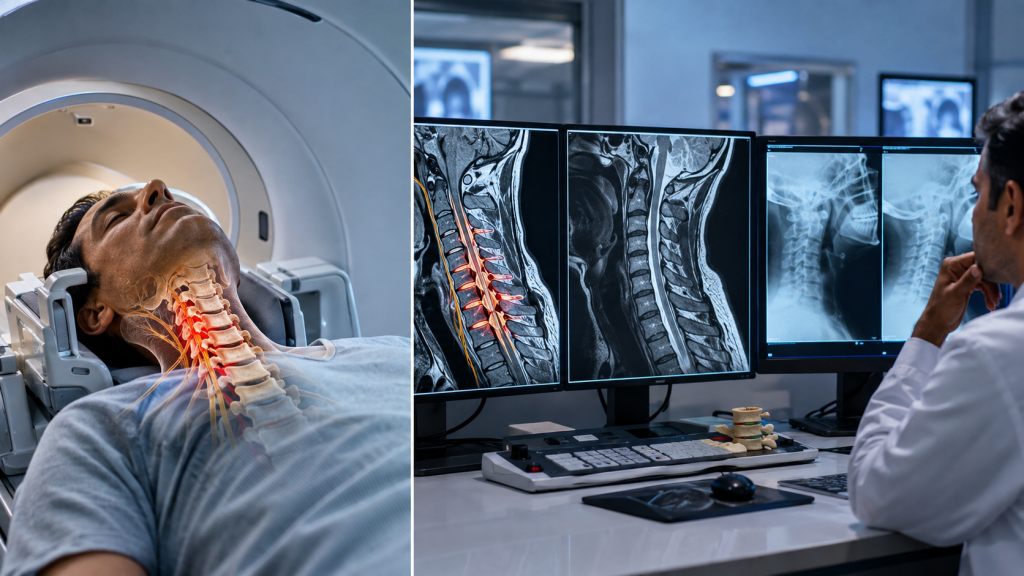
Diagnosing cervical spondylosis typically involves a combination of clinical examination and imaging techniques.
Physical Examination
Your doctor will ask about your symptoms and examine your neck. They may check:
- How well you can move your head toward your shoulder and rotate your head
- Whether bending your head forward or to the sides causes increased pain or numbness (a sign of nerve pressure)
- Weakness in your shoulders and arms
- Loss of feeling in certain areas
Imaging Tests
X-rays: A spine or neck x-ray can show arthritis or other changes in your spine, such as bone spurs.
MRI (Magnetic Resonance Imaging): MRI offers detailed insights into soft tissue and nerve involvement. It can show whether the spinal cord or nerve roots are being compressed.
CT Scans: CT scans of the neck may be done when more detailed imaging is needed.
Treatment Options
Treatment for cervical spondylosis depends on the severity of your symptoms. Most cases respond well to conservative treatment that includes medication and physical therapy.
Lifestyle Changes
Simple daily habits can significantly improve symptoms:
- Maintaining correct sitting posture
- Taking frequent breaks from desk work
- Limiting prolonged mobile phone use
- Performing regular neck exercises
- Maintaining a healthy body weight
Pain Medications
Over-the-counter medications are often sufficient to control cervical spondylosis pain:
- Paracetamol for mild pain
- Non-steroidal anti-inflammatory drugs (NSAIDs) like ibuprofen or naproxen
- Stronger prescription medications may be needed for severe pain
Physiotherapy
A physical therapist can teach you exercises to help stretch and strengthen the muscles in your neck and shoulders. Physiotherapy typically includes:
- Stretching exercises to improve flexibility
- Strengthening exercises for neck and shoulder muscles
- Posture correction
- Manual therapy techniques
Regular exercise and maintaining activity will help speed recovery, even if you have to temporarily modify some exercises because of neck pain.
Neck Exercises
Exercises are a cornerstone of cervical spondylosis management. We’ll cover specific exercises in the next section.
Cervical Collar (When Recommended)
Wearing a soft collar around your neck for short periods may help reduce symptoms. However, most experts recommend avoiding prolonged collar use, as it can weaken neck muscles. Patients should be advised to keep active, maintain their normal activities, and avoid the use of a cervical collar.
Steroid Injections
Corticosteroid injections can help reduce inflammation and pain. They may be recommended when other conservative treatments haven’t provided adequate relief.
Surgery (When Required)
Surgery is reserved for cases where conservative treatment fails or when there are significant neurological problems. Surgical intervention is indicated for patients presenting with severe or progressive neurologic deficits.
Indications for surgery include:
- Intractable pain that doesn’t improve with conservative therapy
- Progressive symptoms or weakness
- Moderate-to-severe myelopathy (spinal cord dysfunction)
- Progression of signs and symptoms
Surgical options include:
- Anterior cervical diskectomy and fusion (ACDF): A common treatment with clinical success in relieving pain and improving neurologic symptoms
- Laminectomy: Removing part of the vertebra to create more space for the spinal cord
- Corpectomy: Removing a vertebral body to decompress the spinal cord
Best Exercises for Cervical Spondylosis
Gentle, consistent exercises can help manage pain, improve flexibility, and strengthen neck muscles. Always consult a physiotherapist or doctor before starting any exercise program.
1. Chin Tucks
- Sit or stand with your back straight
- Gently pull your head straight back, as if making a double chin
- Hold for 5 seconds
- Repeat 10 times
- This strengthens deep neck muscles and improves posture
2. Neck Tilts
- Slowly tilt your head to one side, bringing your ear toward your shoulder
- Hold for 15-30 seconds
- Return to center and repeat on the other side
- Repeat 3-5 times each side
3. Neck Rotations
- Slowly turn your head to one side, looking over your shoulder
- Hold for 15-30 seconds
- Return to center and repeat on the other side
- Repeat 3-5 times each side
4. Shoulder Shrugs
- Lift your shoulders up toward your ears
- Hold for 5 seconds
- Relax and let them drop
- Repeat 10 times
5. Isometric Exercises
- Press your palm against your forehead and push forward while resisting with your neck
- Hold for 5 seconds
- Repeat on each side
- These strengthen neck muscles without moving the joints
Home Care Tips
Posture Matters
- Keep your head upright while walking or standing—avoid excessive flexion or extension
- Don’t bend your head down while reading
- Change posture every 30–60 minutes
Ergonomic Adjustments
- Position your computer screen at eye level
- Use a supportive chair with good back support
- Keep your phone at eye level to avoid “text neck”
Heat and Cold Therapy
- Use an ice pack to reduce inflammation (for acute pain)
- Apply a heating pad to relax stiff muscles
- Follow your doctor’s or physical therapist’s guidance on which to use
How to Prevent Cervical Spondylosis
While you can’t stop aging, you can reduce your risk and slow the progression of cervical spondylosis:
1. Exercise Regularly
Regular strengthening and flexibility exercises for neck and back muscles help maintain spinal health. Regular aerobic exercises like running, swimming, or cycling are also beneficial.
2. Maintain Good Posture
Practice postural awareness to maintain good posture while sitting, standing, and using electronic devices. Keep your head upright and avoid bending your neck forward for long periods.
3. Maintain a Healthy Weight
Being overweight increases stress on your spine. Maintaining a healthy weight range reduces this stress.
4. Quit Smoking
Smoking increases the rate of disc degeneration. Quitting smoking can significantly reduce your risk.
5. Take Frequent Breaks
Avoid sitting in one position for too long. Take breaks every 30–60 minutes during desk work. Stand up, stretch, and move around.
6. Workplace Modifications
Make changes to your workspace to reduce stress on your back and neck. This includes adjusting your chair, desk, and computer screen height.
When to See an Orthopedic Doctor
You should consult an orthopedic doctor for neck pain if:
- Your neck pain doesn’t improve with rest or over-the-counter medications
- You experience numbness, tingling, or weakness in your arms or hands
- The pain radiates down your arms or into your shoulders
- You have headaches that accompany neck pain
- You’ve been in an accident or had a neck injury
- You notice changes in your coordination or balance
- You have difficulty walking
For residents of Bhubaneswar, consulting the best orthopedic doctor in Bhubaneswar can help you get an accurate diagnosis and a personalized treatment plan. Early intervention can prevent the condition from worsening and improve your quality of life.
Frequently Asked Questions
1. What is cervical spondylosis?
Cervical spondylosis is a general term for age-related wear and tear affecting the spinal disks in your neck. It’s also called neck arthritis or cervical osteoarthritis.
2. What are the common symptoms of cervical spondylosis?
Common symptoms include neck pain and stiffness, pain radiating to the shoulders or arms, numbness or tingling in the arms or hands, headaches (especially in the back of the head), and sometimes weakness or coordination problems.
3. What causes cervical spondylosis?
Cervical spondylosis is caused by age-related degenerative changes including dehydrated disks, bone spurs, herniated disks, and stiff ligaments. These changes are normal and occur in everyone to some degree.
4. Is cervical spondylosis serious?
In most cases, cervical spondylosis is not serious and responds well to conservative treatment. However, if it causes significant compression of the spinal cord or nerve roots, it can lead to serious complications like weakness, coordination problems, or loss of bladder/bowel control.
5. Can cervical spondylosis be cured?
There’s no cure for cervical spondylosis since it’s a degenerative condition related to aging. However, symptoms can be effectively managed with treatment, and many people experience significant improvement with conservative care.
6. What is the best treatment for cervical spondylosis?
The best treatment depends on the severity of your symptoms. Most cases respond well to a combination of lifestyle changes, pain medications, and physiotherapy. More severe cases may require steroid injections or surgery.
7. What exercises are good for cervical spondylosis?
Gentle exercises like chin tucks, neck tilts, neck rotations, shoulder shrugs, and isometric exercises can help. Always consult a physiotherapist or doctor before starting any exercise program.
8. When should I see a doctor for neck pain?
Seek medical attention if you experience sudden numbness or weakness, loss of bladder or bowel control, pain that doesn’t improve with rest, pain radiating down your arms, or if you’ve had a neck injury.
9. Can cervical spondylosis be prevented?
While you can’t prevent the aging process, you can reduce your risk by exercising regularly, maintaining good posture, avoiding smoking, maintaining a healthy weight, and taking frequent breaks from sitting.
10. Is surgery necessary for cervical spondylosis?
Surgery is rarely needed and is usually reserved for cases that don’t respond to conservative treatment or when there are significant neurological problems. Most people improve with non-surgical treatments.
11. How long does cervical spondylosis last?
Cervical spondylosis is a chronic condition that doesn’t go away completely. However, with proper management, symptoms can be controlled, and many people experience long periods without significant pain.
12. Can young people get cervical spondylosis?
While cervical spondylosis is most common in people over 60, it can affect younger people, especially those with jobs or hobbies that involve repetitive neck motions, poor posture, or previous neck injuries.
Conclusion
Cervical spondylosis is a common condition that affects millions of people worldwide. While it’s primarily age-related, factors like occupation, genetics, smoking, and lifestyle can influence its development and severity.
The good news is that most cases can be managed effectively. From lifestyle changes and physiotherapy to medications and, in rare cases, surgery, there are numerous treatment options available. The key is early recognition and prompt treatment.
Remember these key takeaways:
- Cervical spondylosis is age-related wear and tear of the neck joints and disks
- Symptoms include neck pain, stiffness, and sometimes radiating pain or numbness
- Most cases respond well to conservative treatment
- Exercise, good posture, and a healthy lifestyle can help prevent and manage symptoms
- Seek medical attention if you experience serious symptoms like weakness or loss of bladder control
If you’re living with neck pain and stiffness, don’t wait for it to get worse. With the right diagnosis and treatment plan, you can get back to living a full, active life.
Don’t let neck pain control your life any longer.
If you’re struggling with persistent neck pain, stiffness, numbness, or weakness in your arms, professional help is available. Dr. Dibyaranjan Sahoo a leading orthopedic and robotic joint replacement specialist—provides comprehensive care for cervical spondylosis and other spine conditions. From accurate diagnosis to personalized treatment plans including physiotherapy and advanced procedures, expert care is available right here in Bhubaneswar.
Visit us at: Pragati Enclave, MIG S 21, Neeladri Vihar, Chandrasekharpur, Bhubaneswar, Odisha 751016
book an appointment
Learn more: drdibyaranjansahoo.com
Take the first step toward a pain-free life today. Schedule a consultation with the best orthopedic doctor in Bhubaneswar and get back to doing what you love.
