
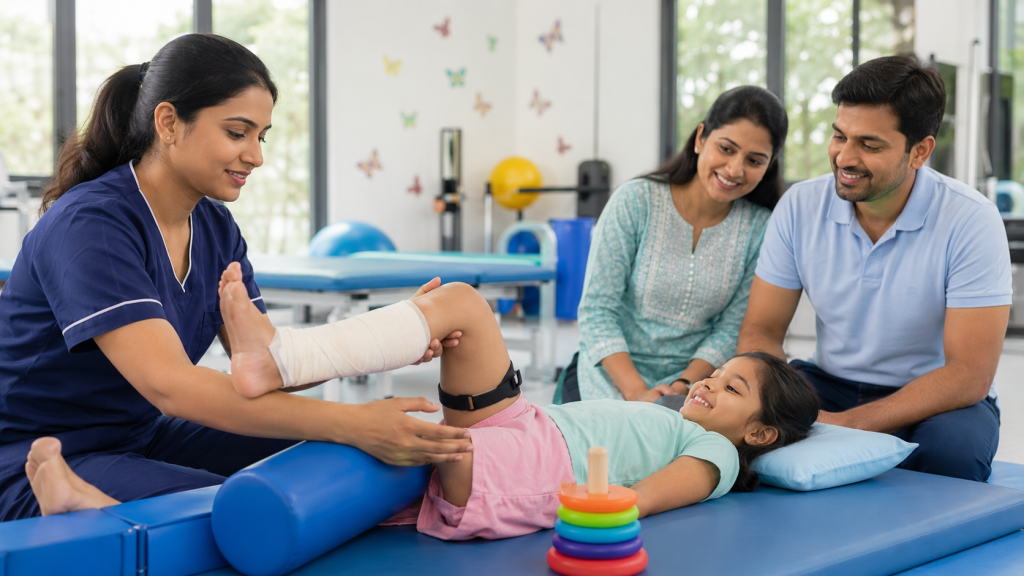
As a Pediatrics orthopedics doctor in Bhubaneswar, one of the most common questions I hear from parents is: “My child’s fracture has healed, but they’re still limping. What do we do now?” Or “My son had surgery on his leg, but he’s scared to walk again. Is this normal?”
The answer to these questions often lies in one word: physiotherapy.
Children are remarkably resilient. Their bones heal faster than adults, and their bodies have an incredible ability to recover. But healing doesn’t stop when the cast comes off or the stitches dissolve. The journey back to full function to running, jumping, and playing without fear requires guidance, patience, and the right rehabilitation.
This guide is written to help parents in Bhubaneswar and across Odisha understand the vital role of physiotherapy in pediatric Orthopedics what it is, why it matters, which conditions benefit from it, and how you can support your child through the recovery journey.
Table of Contents
- Why Physiotherapy Matters in Pediatrics Orthopedics
- Common Conditions That Benefit from Physiotherapy
- Signs Your Child May Need Physiotherapy
- Understanding Pediatric Rehabilitation
- How Physiotherapy Helps Children Recover Faster
- Common Physiotherapy Techniques Used for Children
- Physiotherapy After Orthopaedic Surgery
- Benefits of Early Rehabilitation
- The Role of Parents During Physiotherapy
- Myths About Pediatric Physiotherapy
- Prevention Tips for Parents
- When to Visit a Paediatric Orthopaedics Doctor in Bhubaneswar
- Frequently Asked Questions (FAQ)
Why Physiotherapy Matters in Pediatric orthopedics
Children are not simply “small adults” when it comes to recovery. Their bodies are growing, their bones are still forming, and their muscles are developing coordination and strength. When an injury or condition disrupts this process, pediatric orthopedic physiotherapy steps in to restore balance.
Key reasons why physiotherapy is essential:
- Restores movement: After a fracture, surgery, or prolonged immobilisation, joints can become stiff. Physiotherapy gently restores range of motion.
- Rebuilds muscle strength: A limb that has been in a cast for weeks loses muscle mass. Strengthening exercises rebuild what was lost.
- Corrects walking patterns: Children often develop compensatory limps after an injury. Physiotherapy retrains proper gait.
- Prevents long-term complications: Without rehabilitation, a child may develop permanent stiffness, weakness, or deformity.
- Builds confidence: Many children become fearful of movement after an injury. Physiotherapy helps them trust their body again.
Doctor’s Note :- A fracture that heals perfectly on an X-ray may still leave a child unable to walk normally. Healing the bone is only half the battle restoring function is the other half. This is why physiotherapy is not an optional extra; it is an essential part of complete recovery.
Common Conditions That Benefit from Physiotherapy
Paediatric orthopaedic physiotherapy plays a vital role in managing a wide range of conditions. Here are the most common ones I see in my clinic:
Fractures
After the cast comes off, the real work begins. Physiotherapy helps restore joint mobility, rebuild muscle strength, and retrain normal movement patterns. Without it, children may develop persistent limps or stiffness.
Growth Plate Injuries
Growth plate fractures which account for approximately 15–30% of all childhood fractures require careful rehabilitation to ensure the bone continues to grow properly. Physiotherapy supports safe return to activity while protecting the healing growth plate.
Sports Injuries
Sprains, ligament injuries, and overuse injuries like stress fractures are increasingly common in young athletes. Physiotherapy addresses the root cause whether it’s muscle imbalance, poor technique, or inadequate conditioning and prevents re-injury.
Clubfoot
Physiotherapy, including passive stretching and strapping, can begin as early as 48 hours after birth. Early intervention helps the child develop a normal walking pattern.
Developmental Dysplasia of the Hip (DDH)

Physiotherapy supports hip function and development, often in conjunction with bracing.
Cerebral Palsy
Children with cerebral palsy benefit enormously from physiotherapy to improve muscle strength, balance, coordination, and functional mobility.
Torticollis and Plagiocephaly
Gentle stretching and positioning exercises help correct head and neck alignment in infants.
Osgood-Schlatter Disease and Sever’s Disease
These growth-related conditions common in active adolescents respond well to strengthening, stretching, and activity modification.
Scoliosis
Physiotherapy-based approaches focus on three-dimensional postural correction and muscle activation to manage spinal curvature.
Signs Your Child May Need Physiotherapy
Many parents ask me: “How do I know if my child needs physiotherapy or just more time?” Here are the signs that should prompt a visit:
Red flags to watch for:
- Persistent limping more than 2–4 weeks after a fracture or injury
- Inability to fully straighten or bend a joint after cast removal
- Complaints of stiffness or pain during normal activities
- Avoidance of physical activities they used to enjoy
- Difficulty climbing stairs, running, or keeping up with peers
- A visible difference in how they walk or stand
- Muscle wasting (the affected limb looks thinner than the other)
- Fear of falling or reluctance to bear weight on a limb
In younger children and toddlers, also watch for:
- Preference for using one hand or leg over the other
- Delayed milestones like walking, running, or jumping
- Frequent tripping or falling
Doctor’s Note: If your child has had a fracture, growth plate injury, or orthopedic surgery, do not assume they will just get better with time. Early physiotherapy prevents complications and speeds recovery.
Understanding Pediatric Rehabilitation
Pediatric rehabilitation is a holistic approach to helping children regain function after injury, illness, or surgery. Unlike adult rehabilitation, it takes into account the child’s growth and development.
Key principles of children’s rehabilitation:
- Age-appropriate: Exercises are designed to match the child’s developmental stage.
- Play-based: Children learn best through play. Therapy is often disguised as games.
- Family-centred: Parents are active participants in the rehabilitation process.
- Goal-oriented: Clear, measurable goals are set—like walking without a limp, climbing stairs, or returning to sports.
- Progressive: As the child improves, exercises become more challenging.
The ultimate goal of paediatric orthopaedic rehabilitation is not just to heal the injury, but to help the child return to a full, active, and confident life.
How Physiotherapy Helps Children Recover Faster
The benefits of physiotherapy extend far beyond the treatment room. Here’s how it makes a difference:
1. Restores Range of Motion
After a period of immobilization whether from a cast, splint, or surgery joints become stiff. Physiotherapy uses gentle stretching and mobilization techniques to restore full movement.
2. Rebuilds Muscle Strength
Muscles weaken when they are not used. Strengthening exercises target specific muscle groups to rebuild strength and support the healing bone or joint.
3. Improves Balance and Coordination
Injuries can disrupt a child’s sense of balance. Balance training like standing on one leg, walking on uneven surfaces, or using a balance board restores stability and prevents falls.
4. Retrains Normal Gait
Many children develop a limp or abnormal walking pattern after an injury. Gait re-education teaches them to walk correctly again.
5. Reduces Pain
Manual therapy, gentle exercises, and modalities like heat or ice help manage pain without relying solely on medication.
6. Prevents Long-Term Complications
Without physiotherapy, children may develop permanent stiffness, muscle weakness, or joint problems. Early intervention prevents these issues.
7. Boosts Confidence
Perhaps most importantly, physiotherapy restores a child’s confidence. When they can move without pain or fear, they return to school, sports, and friendships with renewed energy.
Common Physiotherapy Techniques Used for Children
Paediatric physiotherapists use a variety of techniques, all tailored to the child’s age, condition, and personality. Here are some of the most common:
- Exercise Therapy: Strengthening, stretching, and functional exercises designed to improve specific movements.
- Gait Re-education: Teaching children to walk correctly through practice and guidance.
- Balance and Proprioception Training: Exercises that improve body awareness and stability like single-leg stance, obstacle courses, and Swiss ball exercises.
- Manual Therapy: Hands-on techniques like massage and joint mobilisation to reduce stiffness and improve circulation.
- Postural Management: Teaching children and parents how to maintain healthy postures during daily activities.
- Taping and Bracing: Providing support to injured or weak areas.
- Gamified Exercises: Using games, apps, and virtual reality to make therapy fun and engaging.
- Aquatic Therapy: Water-based exercises that reduce weight-bearing stress and make movement easier.
- Home Exercise Programs: Simple exercises that parents can do with their children daily.
From My Clinic: i always emphasize that physiotherapy should never feel like a punishment. When children enjoy their sessions, they engage more fully and recover faster. A good Pediatric physiotherapist knows how to turn exercise into play.
Physiotherapy After Orthopedic Surgery
Surgery is often just the first step. The real journey to recovery begins afterward and physiotherapy after orthopedics surgery is indispensable.
After surgery, children may experience stiffness, swelling, weakness, and pain. Physiotherapy helps:
- Restore range of motion: Gentle, progressive exercises prevent joint stiffness.
- Rebuild strength: Targeted strengthening exercises support the healing tissues.
- Improve function: Children learn to perform daily activities like walking, climbing stairs, or writing safely.
- Prevent complications: Early mobilisation reduces the risk of muscle wasting, joint contractures, and other complications.
- Manage scar tissue: Techniques like massage and stretching help keep scars flexible and prevent adhesions.
Timeline to expect:
- Immediately after surgery: Gentle range-of-motion exercises and pain management.
- 2–6 weeks post-surgery: Gradual strengthening and functional exercises.
- 6–12 weeks: Advanced exercises, balance training, and return to activity.
- Beyond 12 weeks: Sport-specific training and full return to normal life.
In some cases, physiotherapy begins before surgery (prehabilitation) to prepare the child’s body for the procedure and speed up recovery. After surgery, physiotherapy may be recommended twice weekly for several months, with regular follow-ups.
Benefits of Early Rehabilitation
The earlier physiotherapy begins, the better the outcomes. Early children’s rehabilitation offers:
- Faster Recovery: Starting therapy soon after diagnosis or surgery accelerates healing.
- Better Long-Term Outcomes: Early intervention prevents complications and deformities.
- Reduced Need for Further Intervention: Proper rehabilitation reduces the risk of re-injury or the need for additional procedures.
- Lower Healthcare Costs: Physiotherapy-led care is cost-effective and reduces the burden on orthopaedic services.
- Improved Quality of Life: Children return to normal activities sooner and with greater confidence.
- Better Psychological Outcomes: Children who recover function quickly are less likely to develop anxiety or fear around movement.
Doctor’s Note: I often tell parents that the first 6–8 weeks after an injury or surgery are the most critical for rehabilitation. This is the window where the foundation for full recovery is built. Delaying physiotherapy during this period can lead to longer recovery times and poorer outcomes.
The Role of Parents During Physiotherapy
Parents are the most important partners in a child’s recovery. Your involvement can make all the difference.
Be Supportive, Not Pushy
Encourage your child without forcing them. Celebrate small victories every step, every stretch, every exercise completed is progress.
Practice at Home
Physiotherapists often provide home exercise programs. Consistency is key. Even 15 -20 minutes of daily practice can yield significant results. Make it a part of your daily routine perhaps right after school or before dinner.
Communicate Openly
Share your observations with the physiotherapist. What works? What doesn’t? Your input is invaluable in tailoring the program to your child’s needs.
Make it Fun
Turn exercises into games. Use toys, music, or rewards to keep your child engaged. For example, you can turn balance exercises into a “statue game” or use colourful stickers to track progress.
Be Patient
Recovery takes time. There will be good days and challenging days. Stay positive and trust the process. Your optimism is contagious.
Educate yourself
Learn about your child’s condition and the purpose of each exercise. When you understand the “why,” you can explain it to your child in simple terms and they’ll be more motivated to participate.
Advocate for Your Child
If something doesn’t feel right if your child is in excessive pain or not making progress speak up. You are your child’s best advocate.
Myths About Pediatric Physiotherapy
Myth 1: My child will grow out of it.
Fact: While some conditions resolve naturally, many do not. Delaying treatment can make problems worse and lead to long-term complications.
Myth 2: Physiotherapy is only for adults.
Fact: Children benefit enormously from physiotherapy. Their growing bodies are highly responsive to treatment, and early intervention can prevent lifelong issues.
Myth 3: Physiotherapy is painful.
Fact: Therapy is gentle and age-appropriate. The goal is to reduce pain, not cause it. A good physiotherapist will never push a child beyond their comfort zone.
Myth 4: Only children with disabilities need physiotherapy.
Fact: Physiotherapy helps children with fractures, sports injuries, post-surgical recovery, and many other conditions. It’s for any child who needs help regaining movement or function.
Myth 5: I can do the exercises at home without a therapist.
Fact: A qualified paediatric physiotherapist designs a program tailored to your child’s specific needs. Incorrect exercises can do more harm than good. Always follow the therapist’s guidance.
Myth 6: Physiotherapy is just exercise.
Fact: While exercise is a big part of it, physiotherapy also includes manual therapy, education, pain management, and psychological support. It’s a comprehensive approach to healing.
Prevention Tips for Parents
As a Pediatric Orthopedics doctor in Bhubaneswar, I believe prevention is always better than treatment. Here are practical steps to support your child’s bone and joint health and reduce the need for physiotherapy in the first place:
Ensure adequate Calcium and Vitamin D: Milk, dairy products, green leafy vegetables, eggs, and safe sun exposure are essential for strong bones in growing children. Many children in India including in Odisha are found to be Vitamin D deficient.
Encourage weight-bearing exercise: Activities like running, jumping, and dancing help build bone density and make bones stronger and more resilient.
Invest in protective gear: Helmets, knee pads, wrist guards, and elbow pads during cycling, skating, and contact sports dramatically reduce fracture risk.
Create a safe home environment: Use stair gates for toddlers. Ensure bunk beds have safety rails. Remove loose rugs that cause slips.
Supervise playground time: Monkey bars, climbing frames, and trampolines account for a large proportion of paediatric fractures. Supervision and age-appropriate equipment matter.
Screen for Vitamin D deficiency: I routinely screen for this during annual wellness visits.
Do not delay after an injury: A fracture or injury diagnosed and treated promptly heals far better than one that is walked on for days before being assessed.
Encourage active play: Children who are physically active have stronger muscles, better coordination, and lower injury risk.
When to visit a Paediatric Orthopaedics Doctor
Please bring your child to see me or visit the nearest emergency facility immediately if:
- There is visible bone deformity or an open wound near the injury
- Your child refuses to use the affected limb at all
- There is numbness, tingling, or the limb appears pale or cold (possible vascular injury)
- Severe swelling develops within minutes of the injury
- Your child is in uncontrollable pain
- You heard a pop or snap at the time of injury
- Your child has persistent limping or difficulty walking more than 2–4 weeks after an injury
- Your child is not meeting developmental milestones like walking, running, or jumping
- You have any concern about your child’s bone, joint, or muscle health
Book a consultation with Dr. Dibya Ranjan Sahoo, Pediatric orthopedics doctor in Bhubaneswar, for any bone injury concern, growth plate evaluation, or follow-up after a fracture. Early assessment leads to better outcomes always.
Frequently Asked Questions (FAQ)
Q1. What is physiotherapy in Pediatric orthopedic?
It is a specialized form of rehabilitation that helps children with bone, joint, and muscle conditions improve movement, strength, and function. It uses age-appropriate exercises, manual therapy, and play-based techniques to restore mobility and confidence.
Q2. At what age can a child start physiotherapy?
Physiotherapy can begin from birth. Conditions like clubfoot and torticollis are often treated in infancy. There is no lower age limit therapy is always adapted to the child’s developmental stage.
Q3. How long does Pediatrics physiotherapy take?
The duration depends on the condition. Some children need a few weeks, while others may require months or longer. Simple fractures may need 4–6 weeks of rehabilitation, while more complex conditions like cerebral palsy may involve ongoing therapy.
Q4. Is physiotherapy painful for children?
No. Therapy is gentle and designed to be comfortable. The goal is to reduce pain and improve function. A good physiotherapist will never push a child beyond their comfort zone.
Q5. Can physiotherapy prevent surgery?
In many cases, yes. Conditions like in-toeing, flat feet, and some fractures can be managed without surgery through physiotherapy. Even when surgery is needed, physiotherapy before and after improves outcomes.
Q6. What should my child wear to a physiotherapy session?
Comfortable clothing like shorts and a vest top, so the therapist can assess movement. Loose, flexible clothing allows for a full range of motion.
Q7. How often will my child need physiotherapy?
Frequency varies. Some children attend weekly sessions; others may need more intensive therapy 2–3 times per week. The physiotherapist will recommend a schedule based on your child’s specific needs.
Q8. Can I do physiotherapy exercises with my child at home?
Yes. Physiotherapists often provide home exercise programs to complement clinic sessions. Consistency at home is key to faster recovery.
Q9. What conditions does pediatrics physiotherapy treat?
It treats fractures, sports injuries, growth-related conditions (like Osgood-Schlatter and Sever’s disease), congenital deformities (like clubfoot and DDH), neurological conditions (like cerebral palsy), and post-surgical recovery.
Q10. How do I know if my child needs physiotherapy?
If your child has difficulty walking, persistent pain, limited movement, is recovering from an injury or surgery, or is not meeting developmental milestones, consult a paediatric orthopaedic specialist. Early evaluation is always better.
Q11. Can my child return to sports after physiotherapy?
Yes, in the vast majority of cases, children return to full sporting activity after completing their rehabilitation. However, it is essential to wait until the bone is fully healed and any required physiotherapy is completed. Returning too early significantly increases the risk of re-injury.
Q12. How does physiotherapy help after a fracture?
After cast removal, physiotherapy restores joint mobility, rebuilds muscle strength, retrains normal walking patterns, and prevents stiffness. Most children return to full activity within 4–12 weeks.
Conclusion
Pediatrics fractures and orthopedic conditions are common, but with the right knowledge and timely medical care, the vast majority of children recover completely and return to their active lives. The key is recognizing the signs early, seeking evaluation without delay, and trusting a specialist who understands the unique demands of a growing skeleton.
Physiotherapy in Pediatrics Orthopedics is not an optional extra it is an essential part of complete recovery. It restores movement, rebuilds strength, and gives children the confidence to run, play, and grow without fear.
If your child has sustained a bone injury, is recovering from surgery, or has any condition affecting their ability to move freely I welcome you to book an appointment at my clinic. As a dedicated Pediatric Orthopedics doctor in Bhubaneswar, my goal is to give every child the most appropriate, evidence-based care so they can heal quickly and grow well.
Every child deserves the freedom to move, play, and grow with confidence. If your child is experiencing difficulty walking, recovering from an injury, or needs specialised pediatric orthopedics care, schedule a consultation with Dr. Dibya Ranjan Sahoo today. Early physiotherapy and expert treatment can make a lifelong difference.
Dr. Dibya Ranjan Sahoo
Pediatric Orthopedics Doctor in Bhubaneswar
UTKAL ORTHO CARE, Pragati Enclave, MIG S 21, Niladri Vihar, Chandrasekharpur, Bhubaneswar, Odisha 751016
📞 +91 83288 83481
🌐 https://drdibyaranjansahoo.com
