
Frozen Shoulder
- Home
- Frozen Shoulder
What Is Frozen Shoulder?
Frozen shoulder, also known as adhesive capsulitis, is a condition in which the shoulder joint becomes stiff, painful, and difficult to move. It develops gradually and can significantly limit daily activities such as lifting the arm, dressing, or reaching overhead.
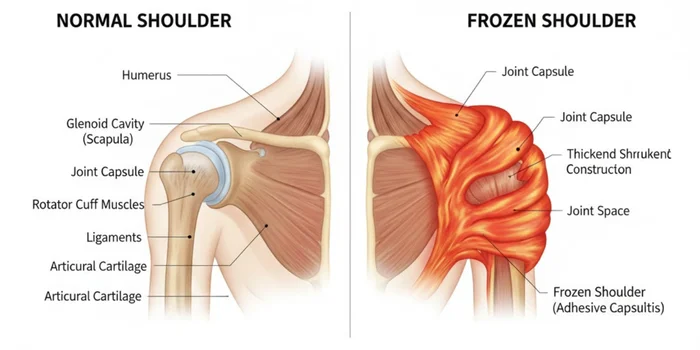
All About Frozen Shoulder
- Cause
- Symptoms
- Treatment
Frozen shoulder often develops due to prolonged shoulder immobility after injury, surgery, or fracture. It is also more common in people with diabetes, thyroid disorders, or after long periods of inactivity.
Common symptoms include persistent shoulder pain, stiffness, limited range of motion, difficulty raising or rotating the arm, and pain that may worsen at night.
Treatment focuses on reducing pain and gradually restoring shoulder movement. Most cases improve with non-surgical treatment, while advanced cases may require medical procedures.
Treatment for Frozen Shoulder
Frozen shoulder treatment aims to relieve pain, improve flexibility, and restore normal shoulder function.
- Pain-relief and anti-inflammatory medications
- Physiotherapy and stretching exercises
- Heat therapy and activity modification
- Injection therapy for pain and stiffness
- Advanced procedures for severe cases
- Guided rehabilitation and follow-up care
Other Treatments
Book an Appointment
Frequently Asked Questions
Frozen shoulder can last several months to over a year, but proper treatment helps speed up recovery.
Yes, many cases improve over time, but treatment helps reduce pain and restore movement faster.
Yes, people with diabetes have a higher risk of developing frozen shoulder.
Early movement and physiotherapy after shoulder injury or surgery can help reduce the risk.
