

Mr.Sharma had been experiencing a persistent ache deep in his thigh for weeks. At first, he thought it was just muscle soreness from his morning walks. Meanwhile, his neighbour, Mrs. sharma, complained of stiff, swollen knees that made getting up from her chair difficult. Both were in pain, but the nature of their discomfort was completely different. Understanding whether your pain originates from a bone or a joint is not just about satisfying curiosity it is often the first step toward finding the right treatment and relief.
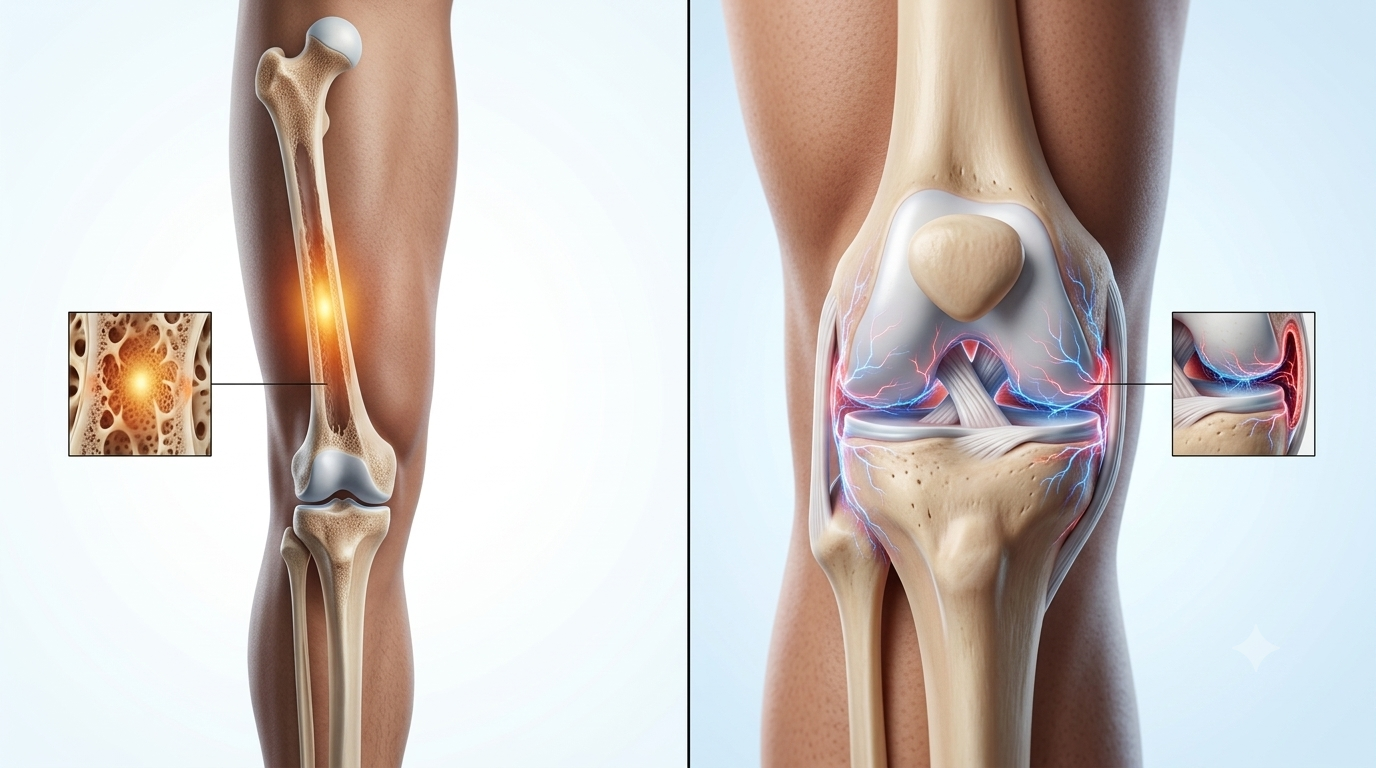
The question “Is it bone pain or joint pain?” is common, but the answer isn’t always straightforward. Bone pain usually feels like a deep, dull, or penetrating ache that comes from deep inside the body. Joint pain, on the other hand, is typically felt around the joint itself and often worsens with movement, accompanied by stiffness or swelling. While these general rules provide clues, symptoms can overlap. This is why persistent pain should always be assessed by a healthcare professional. Consulting a qualified bone and joint pain specialist in Bhubaneswar can help you get an accurate diagnosis and appropriate treatment plan tailored to your specific condition.
What Is Bone Pain?
Bone pain is a sensation of discomfort or pain originating from the bone tissue itself. It is often described as a deep, penetrating, or dull ache that feels like it is coming from the inside out . Unlike muscle or joint pain, bone pain is often constant and present even when you are resting and not moving the affected area
This type of pain can be challenging to ignore because it feels so deep-rooted. Tenderness is often felt when pressing directly on the specific bone area, and the pain is not usually relieved by changing position or resting.
What Is Joint Pain?
Joint pain, also known as arthralgia, is discomfort that arises from the area where two or more bones meet . This includes common joints like the knees, hips, shoulders, and elbows.
A key characteristic of joint pain is its relationship with movement. The pain often worsens when the joint is moved and may be present even when at rest . It is frequently accompanied by other symptoms such as:
- Stiffness: Particularly after waking up or after a period of inactivity.
- Swelling, Warmth, or Redness: These are signs of inflammation, which can occur in conditions like arthritis .
- Grinding or Clicking Sensations: Some people may notice these mechanical symptoms during movement .
Bone Pain vs Joint Pain: Key Differences
While a doctor will make a diagnosis, here is a simple comparison to help you understand the primary differences:
| Feature | Bone Pain | Joint Pain |
| Typical location | Deep within the bone; often a specific, tender spot | Around the joint, where two bones meet |
| Type of pain | Dull, deep, penetrating, or aching | Aching, sore, or sometimes burning or throbbing |
| Relation to movement | Often constant, present even at rest | Typically worse with movement; may be eased by rest |
| Tenderness | Tenderness may be felt directly on the bone | Tenderness around the joint, often over the joint line |
| Swelling | Usually absent | Common, especially with arthritis |
| Stiffness | Usually absent | A very common symptom, especially in the morning |
| Common causes | Injury, fracture, infection, osteoporosis | Osteoarthritis, rheumatoid arthritis, injury, gout, bursitis |
Common Causes of Bone Pain
Bone pain is less common than joint or muscle pain and often signals a more specific issue. When it occurs, it should not be ignored. Common causes include:
- Injury or Fracture: This is the most frequent cause, resulting from an accident, fall, or direct blow.
- Osteoporosis-related Fractures: Weakening of the bones can lead to fractures from minor stress, causing significant pain.
- Bone Infection (Osteomyelitis): A rare but serious infection that originates in or spreads to the bones
- Vitamin or Mineral Deficiencies: Lack of essential nutrients like Vitamin D and calcium can weaken bones, making them more susceptible to pain .
- Overuse or Repetitive Stress: Conditions like stress fractures can develop from high-impact activities over time.
Common Causes of Joint Pain
Joint pain is extremely common and can arise from a variety of conditions. Its widespread nature means that many people will experience it at some point in their lives.
- Osteoarthritis: The most common form of arthritis, caused by the gradual wear-and-tear of joint cartilage over time .
- Rheumatoid Arthritis: An autoimmune disorder where the body’s immune system attacks the joint lining, causing inflammation and swelling .
- Sports Injuries: Injuries to ligaments (like an ACL tear) or tendons around the joint can lead to significant pain.
- Bursitis: Inflammation of the small, fluid-filled sacs that cushion the joint, often caused by overuse or repetitive motion .
- Previous Joint Injury: An old injury that has healed can predispose a joint to future pain and issues.
- Gout: A form of arthritis caused by a buildup of uric acid crystals in a joint, leading to sudden, severe attacks of pain, swelling, and redness .
How Can You Tell Where the Pain Is Coming From?
While the characteristics described above provide strong clues, the exact location of the pain is not always clear. The body is complex, and pain can be referred from one area to another. For example, pain originating from structures near the joint, like ligaments or bursae, may feel like it’s coming from the joint itself . Similarly, back problems can cause pain radiating down to the leg.
A clinical examination by a doctor is essential to pinpoint the source. They will assess location, movement, stiffness, tenderness, and other associated symptoms to determine the best course of action.
When Should You See an Orthopaedic Doctor?
It is wise to seek professional evaluation if you experience:
- Persistent or Worsening Pain: Pain that lasts more than a few weeks or is getting worse.
- Severe Pain After an Injury: Particularly if you cannot bear weight on the limb.
- Swelling or Visible Deformity: Unexplained swelling or a change in the shape of a joint or bone.
- Difficulty Walking or Using the Affected Joint: Pain that limits your mobility or daily activities.
- Fever with Bone or Joint Pain: This could indicate a serious infection.
- Unexplained Pain: Pain that does not improve with rest or simple home measures.
- Recurrent Pain Affecting Sleep: Pain that wakes you up at night or interferes with daily routines.
- Sudden Loss of Movement: If you lose the ability to move a joint.
Important Note: Sudden, severe injury, visible deformity, or inability to bear weight may require urgent medical attention at the nearest emergency facility.
How Are Bone and Joint Problems Diagnosed?
An orthopadic specialist uses a systematic approach to diagnose the cause of your pain. This typically begins with a detailed medical history and a thorough physical examination, where they will check the range of motion, swelling, and tenderness of the affected area .
Depending on the suspected cause, they may recommend:
- X-rays: To check for fractures, bone alignment, and signs of arthritis like joint space narrowing .
- MRI or CT Scans: Provide more detailed images of bones and soft tissues like ligaments, tendons, and cartilage, useful for complex injuries .
- Blood Tests: To check for inflammatory markers, autoimmune disorders, or vitamin deficiencies that might be causing the pain .
It is important to note that not every patient requires all these tests.
Treatment for Bone and Joint Pain
The treatment for pain depends entirely on the underlying cause. There is no single cure-all.
Common approaches include:
- Rest and Activity Modification: Giving the affected area time to heal by avoiding aggravating activities.
- Physiotherapy: A structured program of exercises to strengthen muscles around the joint, improve flexibility, and restore function.
- Strengthening and Mobility Exercises: Key for joint health and for offloading stress from the bones.
- Weight Management: Reducing body weight can significantly decrease the load on weight-bearing joints like knees and hips.
- Pain-Relief Medicines: When advised by a doctor, medications can help manage short-term pain and inflammation.
- Bracing or Supportive Devices: Can provide support, stability, and pain relief for specific conditions.
- Injections or Surgery: For specific conditions like advanced arthritis or severe fractures, these may be considered when conservative treatments are not effective.
Bone and Joint Pain Treatment in Bhubaneswar
If you are dealing with persistent pain that affects your quality of life, consulting an experienced orthopaedic doctor in Bhubaneswar is a crucial step. A qualified orthopedic specialist in Bhubaneswar can perform the necessary examinations to determine the exact source of your pain whether it’s related to bones, joints, or surrounding tissues—and create a personalised treatment plan.
For those seeking a bone and joint pain specialist in Bhubaneswar, several highly experienced professionals are available in the city, equipped with modern diagnostic tools and treatment facilities to manage both simple and complex orthopedic conditions.
Conclusion
Understanding the difference between bone pain and joint pain can help you better describe your symptoms to a doctor. Bone pain often feels deep, dull, and constant, while joint pain is usually around the joint, worsens with movement, and is often accompanied by stiffness. However, self-diagnosis is not a substitute for professional medical evaluation. If you are experiencing persistent, unexplained, or worsening pain, do not ignore it. Seeking help from an orthopaedic specialist ensures you receive an accurate diagnosis and a treatment plan that can help you get back to the activities you enjoy.
Consult an Orthopedic Specialist for Bone and Joint Pain Treatment
If you are experiencing persistent bone or joint pain that is affecting your daily life, it is important to seek professional medical advice. Self-diagnosis and delayed treatment can sometimes lead to worsening of the underlying condition. An experienced orthopedic specialist can accurately identify the source of your pain whether it originates from the bone, joint, or surrounding soft tissues and recommend an appropriate treatment plan tailored to your needs.
Dr Dibya Ranjan Sahoo
MBBS, MS Orthopaedics, DNB Orthopaedics, FELLOWSHIP IN PEDIATRIC ORTHOPEDICS
Address:
Pragati Enclave, MIG S 21, Niladri Vihar, Chandrasekharpur, Bhubaneswar, Odisha 751016
Contact: +91 8328883481
Disclaimer: The information provided in this blog is intended for general educational and informational purposes only. It is not intended to replace professional medical advice, diagnosis, or treatment from a qualified healthcare professional.
