

Ramesh had always been an active person, never giving much thought to his knees as he climbed the stairs to his second-floor apartment. But recently, that familiar routine has changed. With each step upward, he feels a dull ache around his kneecap. Going downstairs is even worse, and he now finds himself holding the railing for support. He is not alone. Many adults in Bhubaneswar experience knee pain when climbing stairs, often dismissing it as a normal sign of aging. However, recurring pain is not something to ignore.
Climbing stairs is a demanding activity for the knee joint. It requires the knee to bend deeply while supporting your full body weight, placing significant stress on the joint structures. This movement acts almost like a stress test for your knees. If there is an underlying problem with the cartilage, kneecap, or surrounding muscles, the pain often becomes apparent during stair climbing. Understanding why this happens and when to seek professional help is the first step toward relief. If the pain persists, consulting the best orthopedic doctor in Bhubaneswar can help you get an accurate diagnosis and appropriate treatment before the condition worsens.
Why Does Your Knee Hurt When Climbing Stairs?
The knee joint experiences forces three to four times your body weight during stair climbing. This is because the activity requires a deep bend of the joint while your muscles work hard to control the movement. As you push your body weight upward, the kneecap is pressed firmly against the thigh bone, increasing the load on the front of the knee.
If the kneecap does not glide smoothly in its groove, or if the cushioning cartilage is worn, this pressure can trigger pain. Weak thigh or hip muscles can also contribute, as they are responsible for stabilizing the knee during this strenuous movement. Without adequate muscle support, the knee joint absorbs more shock than it should, leading to discomfort and potential injury. Many people may also have underlying biomechanical issues that only become noticeable under the strain of stair climbing.
Common Causes of Knee Pain While Climbing Stairs
Several conditions can lead to knee pain when going up or down the stairs. Here are some of the most common causes:
1. Patellofemoral Pain Syndrome
This condition involves irritation of the cartilage on the underside of the kneecap. It is one of the most frequent causes of pain behind the kneecap. If the kneecap does not track smoothly in its groove, activities like climbing stairs, squatting, or sitting for long periods can cause a dull ache or a grinding sensation.
2. Knee Osteoarthritis
Osteoarthritis is a condition where the smooth, protective cartilage covering the bones in the knee gradually wears away. As the cartilage becomes thinner, the joint loses its cushioning. This can lead to stiffness, mild swelling, and pain that worsens with activities requiring more force, such as climbing stairs or after periods of rest.
3. Weak Quadriceps or Hip Muscles
The thigh and hip muscles act as shock absorbers for the knee. When these muscles are weak, the knee joint must bear more of the load. This can cause the kneecap to track improperly and increase strain, resulting in pain during stair climbing. Balancing exercises that strengthen the glutes and hamstrings can help.
4. Meniscus Injury
The meniscus is a C-shaped piece of cartilage that cushions and stabilizes the knee joint. A tear can occur suddenly from a twisting injury or gradually due to age-related wear. A meniscus injury often causes pain on the inner or outer side of the knee, accompanied by swelling, a catching sensation, or difficulty fully straightening the leg.
5. Patellar Tendinitis
This condition involves the inflammation of the tendon that connects the kneecap to the shinbone. It is common in people who are physically active and is sometimes called “jumper’s knee.” It typically causes pain just below the kneecap that worsens during stair climbing or jumping activities.
6. Previous Knee Injury
An old ligament sprain, fracture, or surgery can compromise the knee’s stability. This can leave the joint less able to handle the increased load of stair climbing, leading to pain that persists long after the original injury has healed.
7. Poor Movement Mechanics or Overuse
The way you walk, stand, or distribute your body weight can place uneven stress on the knees. If you have suddenly increased your physical activity, the knee may not be prepared for the increased workload, leading to overuse injuries.
Why Can Going Downstairs Hurt More?
It is a common observation that going down stairs can cause more pain than going up. When you descend, your leg muscles work eccentrically, meaning they lengthen under tension to control your body weight. This eccentric contraction places immense force on the kneecap and the joint surfaces to prevent you from falling. This action is particularly difficult for the knee. The impact and shear forces generated while stepping down can aggravate conditions like patellofemoral pain and osteoarthritis more than the concentric muscle action used for climbing up.
When Should You consult an Orthopedic Doctor?
Occasional discomfort after a heavy workout is common, but persistent or worsening pain is a sign that you need professional help. You should consult an orthopaedic doctor if you experience any of the following:
- Persistent pain lasting more than a few weeks
- Swelling or inflammation in the knee joint
- Difficulty walking or bearing weight on the leg
- A feeling that the knee is unstable or might give way
- Clicking, locking, or a catching sensation in the knee
- Pain that interferes with your daily activities or sleep
- A visible deformity or inability to straighten the knee
If you have experienced a sudden, severe injury accompanied by significant pain and swelling, it is essential to seek prompt medical attention.
How Is Knee Pain Diagnosed?
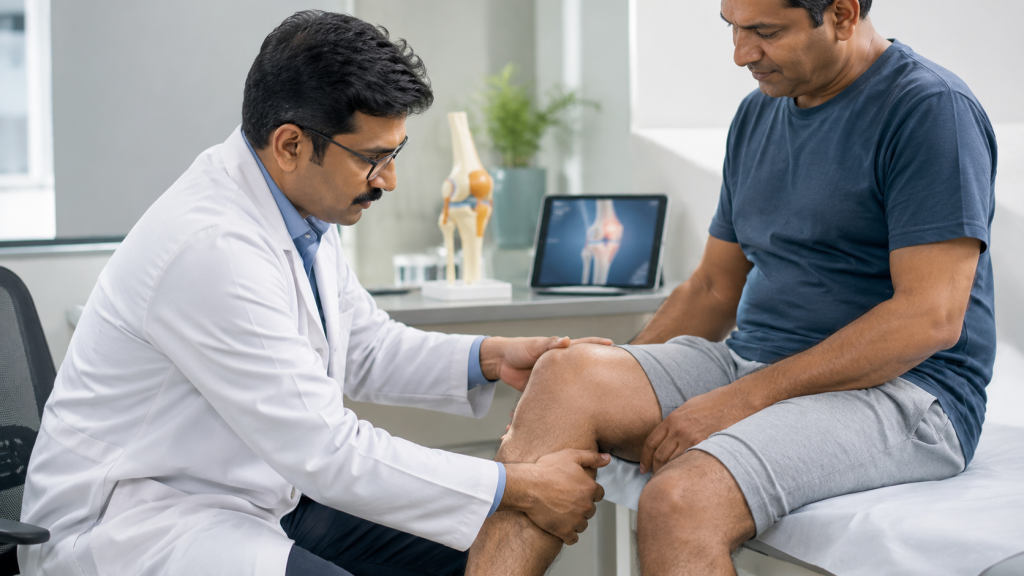
When you visit an orthopedic specialist, they will assess your knee systematically. The process typically begins with a detailed medical history, where you will be asked about how and when the pain started, what makes it worse, and any past injuries.
The doctor will then perform a physical examination. They will check the knee’s range of motion, strength of the surrounding muscles, alignment of the kneecap, and any areas of tenderness or swelling. The doctor will likely order an X-ray to check bone alignment and joint space, which can reveal signs of arthritis. Based on the findings, an MRI may be recommended if a soft tissue injury, such as a meniscus tear or ligament injury, is suspected.
Treatment Options for Knee Pain
The appropriate treatment depends entirely on the underlying cause of the pain. Most patients respond well to non-surgical approaches. Common treatment options include:
- Activity Modification and Physiotherapy: This involves avoiding activities that aggravate the pain and starting a structured exercise program to improve strength and flexibility.
- Strengthening of Quadriceps and Hip Muscles: This is a cornerstone of treatment. Strengthening these muscles supports the knee joint and reduces pressure during activities like stair climbing.
- Weight Management: If applicable, reducing body weight can significantly decrease the load on the knee joints.
- Pain-Relief Medicines: When advised by a doctor, medications can help manage short-term discomfort.
- Bracing or Supportive Measures: In selected cases, a knee brace can provide support and stability.
- Injections or Surgery: These options are considered when conservative treatments are not effective. In some patients, biological therapies may be considered as part of a joint preservation strategy.
Can You Prevent Knee Pain While Climbing Stairs?
While not all conditions can be prevented, you can take steps to protect your knees.
- Strengthen Supporting Muscles: Regular exercises for your quadriceps, hamstrings, and glutes are essential.
- Maintain a Healthy Weight: Keeping your body weight in a healthy range reduces stress on the joints.
- Wear Proper Footwear: Supportive shoes help absorb shock and provide stability.
- Warm Up Before Activity: A proper warm-up prepares your muscles and joints for exertion.
- Pay Attention to Pain: Do not ignore recurring pain. Early intervention can prevent minor issues from worsening.
When Should You Consult an Orthopedic Specialist in Bhubaneswar?
If you are struggling with persistent knee pain that is affecting your quality of life, it is wise to seek expert advice. Whether you are dealing with osteoarthritis, a sports injury, or general wear and tear, finding the best orthopedic doctor in Bhubaneswar can make a significant difference in your recovery journey. A qualified specialist will help you understand your condition and create a treatment plan tailored to your needs.
If you are looking for effective knee pain treatment in Bhubaneswar, it is important to consult a qualified specialist who can provide a proper diagnosis and treatment plan. Many advanced treatments, including robotic-assisted joint replacements, are available in the city to help patients achieve faster recovery with better precision. An experienced orthopaedic specialist in Bhubaneswar can guide you through the entire process, from diagnosis to rehabilitation.
Conclusion
Knee pain when climbing or descending stairs is a common complaint that can stem from a variety of causes, from simple muscle imbalances to conditions like osteoarthritis or a meniscus tear. While occasional discomfort may be harmless, persistent, worsening, or function-limiting pain deserves proper medical evaluation. If your knee pain is interfering with your daily life, do not ignore it. An orthopaedic evaluation can help identify the specific cause of your pain and guide you toward an effective treatment plan, allowing you to return to the activities you enjoy without discomfort. Remember, consulting the best orthopedic doctor in Bhubaneswar is a crucial step toward protecting your joint health and maintaining an active lifestyle.
Dr Dibya Ranjan Sahoo
MBBS, MS Orthopaedics, DNB Orthopaedics, FELLOWSHIP IN PEDIATRIC ORTHOPEDICS
Address :-
Pragati Enclave, MIG S 21, Niladri Vihar, Chandrasekharpur, Bhubaneswar, Odisha 751016
Contact :- +91 8328883481
Book an appointment
Disclaimer: The information provided in this blog is intended for general educational and informational purposes only. It is not intended to replace professional medical advice, diagnosis, or treatment from a qualified healthcare professional.
