
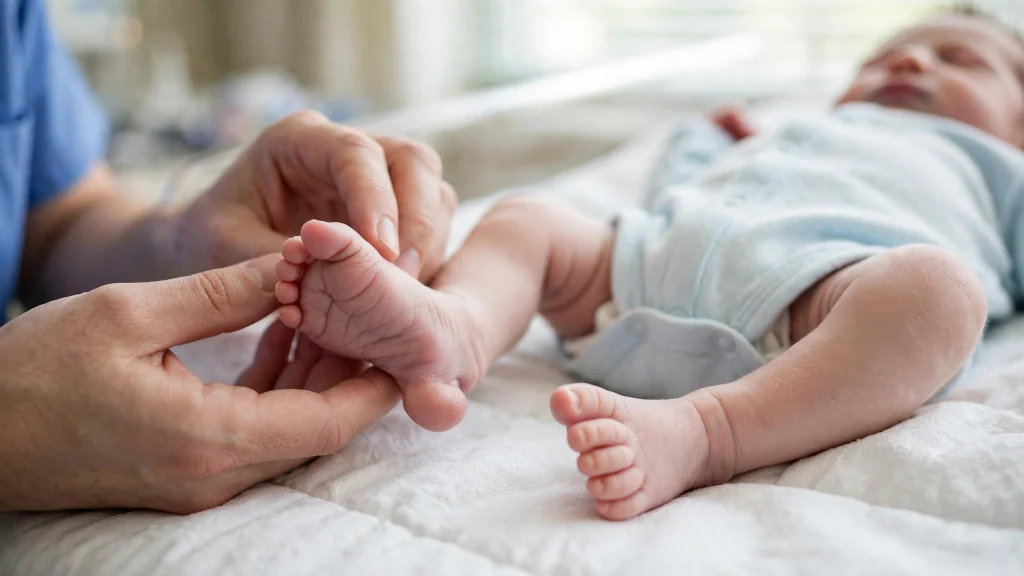
Discovering that your newborn has clubfoot can be overwhelming for any parent. However, it’s important to know that clubfoot is a highly treatable condition, especially when diagnosed and managed early.
With modern treatment techniques like the Ponseti Method, more than 95% of children can achieve normal, pain-free feet and lead active, healthy lives.
If you’re looking for clubfoot treatment in Bhubaneswar, understanding the condition and seeking expert care at the right time can make all the difference.
What is Clubfoot?
Clubfoot, medically known as Congenital Talipes Equinovarus (CTEV), is a birth defect in which one or both feet are twisted inward and downward.
Instead of pointing straight, the baby’s foot appears rotated inward, making it difficult to place the sole flat on the ground.
The condition affects:
- One foot (Unilateral Clubfoot)
- Both feet (Bilateral Clubfoot)
Clubfoot is one of the most common congenital orthopedic conditions, affecting approximately 1 in every 1,000 live births worldwide.
How Does a Normal Foot Differ from a Clubfoot?
| Normal Foot | Clubfoot |
|---|---|
| Faces forward | Turns inward |
| Sole touches ground | Sole points sideways or upward |
| Flexible movement | Stiff and tight |
| Normal tendons | Tight Achilles tendon |
What Causes Clubfoot?
The exact cause of clubfoot is not fully understood. However, research suggests that it develops during pregnancy due to a combination of genetic and environmental factors.
Possible causes include:
Genetics
Children with a family history of clubfoot have a higher chance of developing the condition.
Abnormal Muscle and Tendon Development
Certain muscles and tendons around the foot become shorter and tighter during fetal development.
Neuromuscular Conditions
Clubfoot may be associated with conditions such as:
- Spina bifida
- Cerebral palsy
- Muscular disorders
Environmental Factors
Some studies suggest an increased risk with:
- Maternal smoking during pregnancy
- Poor fetal positioning
- Reduced amniotic fluid
In most cases, however, clubfoot occurs without any identifiable cause.
Is Clubfoot Painful for Newborns?
No.
Clubfoot is not painful at birth because babies are not yet standing or walking.
However, if left untreated, it can lead to:
- Difficulty walking
- Abnormal gait
- Foot pain
- Joint stiffness
- Difficulty wearing regular footwear
- Permanent disability
Early treatment prevents these complications.
Signs and Symptoms of Clubfoot
Parents may notice:
- Foot turned inward
- Sole facing sideways
- Smaller foot than normal
- Tight Achilles tendon
- Calf muscles appear thinner
- Limited ankle movement
Most cases are diagnosed immediately after birth during the newborn examination.
Can Clubfoot Be Diagnosed Before Birth?
Yes. many cases are detected during a routine prenatal ultrasound performed between 18 and 24 weeks of pregnancy.
However, the severity is best assessed after birth by a pediatric orthopedic specialist.
The Ponseti Method: The Gold Standard Treatment
Today, the Ponseti Method is considered the worldwide gold standard for treating clubfoot.
Developed by Dr. Ignacio Ponseti, this method has transformed the lives of millions of children.
It is:
- Safe
- Gentle
- Non-surgical in most cases
- Highly effective
- Cost-effective
Success rates exceed 95% when treatment begins early and families follow the treatment plan.
Step 1: Gentle Manipulation
The pediatric orthopedic surgeon carefully stretches the baby’s foot into a slightly improved position.
The correction is gradual and painless.
Step 2: Serial Casting
After each gentle correction, a plaster cast is applied from the toes to the thigh to hold the foot in the corrected position.
The cast is changed every week.
Most babies require:
- 5–8 casts
Each cast gradually corrects the deformity.
Step 3: Achilles Tenotomy
Approximately 80–90% of babies require a minor procedure called an Achilles Tenotomy.
During this procedure:
- A tiny cut is made in the Achilles tendon.
- It allows the foot to move into the correct position.
- The procedure takes only a few minutes.
- Local anesthesia is usually sufficient.
A final cast is then worn for about three weeks.
Step 4: Bracing
Once the foot is fully corrected, the baby wears a foot abduction brace.
This is the most important step to prevent recurrence.
The brace is worn:
First 3 Months
23 hours a day.
After That
Only during sleep until the child is approximately 4–5 years old.
Parents should never skip the bracing phase, as it significantly reduces the risk of recurrence.
Why Early Treatment Matters
The best time to begin treatment is within the first two weeks after birth.
Early treatment offers several advantages:
- Softer bones are easier to correct
- Better treatment outcomes
- Reduced need for surgery
- Faster correction
- Lower risk of recurrence
- Improved walking ability
Delaying treatment can make correction more difficult and may require more extensive surgery.
When performed correctly by an experienced Pediatric orthopedic surgeon and followed with proper bracing:
- Over 95% of babies achieve excellent correction.
- Most children walk, run, and play normally.
- They can participate in sports and everyday activities without limitations.
Long-term studies have shown that children treated with the Ponseti Method have excellent functional outcomes into adulthood.
What Happens If Clubfoot Is Not Treated?
Untreated clubfoot can lead to:
- Walking on the side or top of the foot
- Pain and discomfort
- Skin ulcers
- Difficulty wearing shoes
- Permanent deformity
- Reduced mobility
Fortunately, these complications are almost entirely preventable with timely treatment.
Caring for Your Baby During Treatment
Parents play a vital role in successful treatment.
Here are some tips:
- Keep casts dry and clean.
- Follow all follow-up appointments.
- Ensure the brace is worn exactly as prescribed.
- Monitor for redness or skin irritation.
- Contact your orthopedic surgeon if the cast becomes loose or damaged.
Consistency is key to achieving the best outcome.
Frequently Asked Questions
Is clubfoot a birth defect?
Yes. Clubfoot is a congenital condition, meaning it is present at birth.
Can clubfoot correct itself naturally?
No. Clubfoot requires medical treatment. It does not resolve on its own.
Is surgery always necessary?
No. Most babies are successfully treated using the Ponseti Method without major surgery.
Is the Ponseti Method painful?
The gentle stretching and casting are generally well tolerated by infants. A minor Achilles tenotomy, when needed, is performed with appropriate pain management.
Can my child walk normally after treatment?
Yes. Most children treated early walk, run, jump, and play just like other children.
Can clubfoot come back?
Yes, recurrence can occur if the bracing schedule is not followed. This is why brace compliance is essential.
Which doctor treats clubfoot?
A paediatric orthopaedic surgeon specializes in diagnosing and treating clubfoot and other musculoskeletal conditions in children.
Why Choose Dr. Dibya Ranjan Sahoo?
If you’re seeking clubfoot treatment in Bhubaneswar, Dr. Dibya Ranjan Sahoo provides compassionate, evidence-based care for children with congenital foot deformities. With expertise in pediatric orthopedics and modern treatment techniques, he offers individualized treatment plans focused on achieving the best long-term outcomes.
Conclusion
A diagnosis of clubfoot can feel worrying, but it is one of the most successfully treated orthopedic conditions in newborns. The Ponseti Method has transformed the lives of countless children, offering excellent correction with minimal intervention when started early.
If your baby has been diagnosed with clubfoot or you have concerns about your newborn’s feet, don’t delay seeking expert care. Early treatment gives your child the best opportunity for healthy, active movement throughout life.
Concerned About Your Baby’s Feet?
Concerned about your baby’s feet? Schedule a consultation with Dr. Dibyaranjan Sahoo today Early diagnosis and timely treatment can make all the difference in helping your child achieve a healthy and active future.
Dr. Dibya Ranjan Sahoo
Pediatrics Orthopedic Doctor in Bhubaneswar
MBBS, MS, DNB Orthopedics
AIIMS Fellowship in Pediatrics Orthopedics
Asst. Professor, KIMS Bhubaneswar
Appointments: +91 8328883481
Website: drdibyaranjansahoo.com
